

Headquarters
7150 Columbia Gateway Drive, Suite L, Columbia, MD 21046
New York Location
112 West 34th Street, 18th floor, Room 18025 New York, NY 10001
Proud Member


Boosting Fan Engagement: The Future of Interactive Stadium Displays in Seattle and Portland3 minute read | Updated June 19, 2026
There is something genuinely exceptional about sports culture in the Pacific Northwest. It doesn't have the century-old tradition of a Boston or a Chicago, or the sprawling multi-franchise dominance of a New York or Los Angeles. What it has is something arguably more compelling: intensity born of scarcity, loyalty forged through decades of near-misses and hard-won triumphs, and a fanbase that shows up with an emotional investment that routinely makes national headlines. Seahawks fans didn't just cheer their team to back-to-back Super Bowl appearances — they registered on seismographs. The Sounders FC faithful built one of the most vibrant soccer supporter cultures in North America almost from the moment the club entered MLS. Mariners fans have endured the longest playoff drought in North American professional sports with a loyalty that speaks volumes about the relationship between this region and its teams. Portland Trail Blazers supporters have packed the Moda Center through rebuilding years and contention windows alike, and the Timbers Army has established Providence Park as one of the most electric atmospheres in American soccer. These fanbases deserve an in-venue experience that matches their passion. And increasingly, the stadium operators, venue managers, and sports entertainment executives responsible for delivering that experience are recognizing that interactive touch screen technology is the infrastructure that closes the gap between the intensity of what happens on the field and the quality of the experience surrounding it. From concourse-length interactive history timelines and self-serve concession kiosks that eliminate the halftime queue to digital fan activation zones where thousands of attendees can participate in live, screen-scale experiences, the next generation of stadium technology is transforming every minute a fan spends in the building — not just the ninety minutes of a Sounders match or the three hours of a Seahawks game.
The Stakes: Why In-Venue Experience Has Never Mattered MoreTo understand why stadium operators across the Pacific Northwest are accelerating their investment in interactive technology, it helps to understand the competitive landscape they're operating within. The at-home viewing experience has never been better. 4K and 8K broadcast technology, multi-angle streaming options, real-time statistics overlays, and the social connectivity of watching with a digital community have made the couch a genuinely compelling alternative to the stadium seat — particularly when that seat costs $150 and requires a two-hour commute. For casual fans, the calculus of attending in person versus staying home has shifted meaningfully over the past decade. What the stadium still offers — and what no broadcast technology can replicate — is the experience of being there. The roar of 69,000 voices at Lumen Field when the Seahawks convert a critical third down. The synchronized chant of the Timbers Army filling Providence Park with smoke and song. The crack of a Mariners home run echoing across T-Mobile Park on a rare clear Seattle evening. These are irreplaceable, and they remain the core of what drives fans through the turnstile. But the moments between those peak experiences — the wait at the concession stand, the walk through an undifferentiated concourse, the halftime with nothing compelling to engage — are where the in-venue experience can feel thin relative to its cost. And it is precisely in those between-moments that interactive technology creates the most value: filling the space between peaks with engagement, information, entertainment, and the kind of participatory experience that deepens a fan's connection to the team and the venue. Deloitte's 2023 Sports Fan Engagement Study found that 68% of sports fans say the quality of the in-venue experience — beyond the game itself — is a significant factor in their decision to attend in person versus watching at home.¹ For venue operators competing for discretionary entertainment dollars in one of the country's most expensive cities for live events, that finding is both a challenge and a clear design brief.
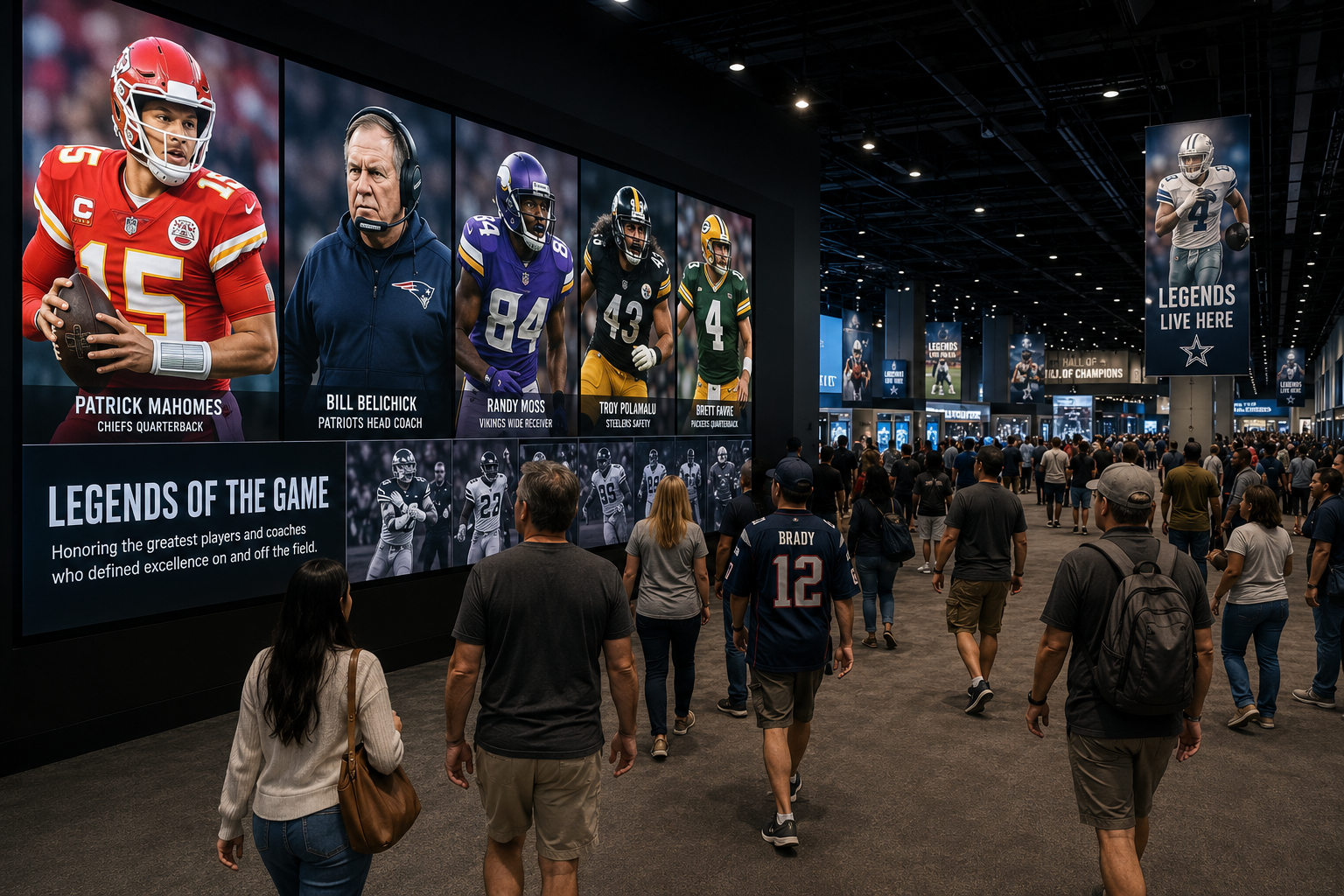
Interactive History Timelines: Honoring the Legacy, Deepening the ConnectionWalk through the concourses of the world's most celebrated sporting venues — the Emirates Stadium in London, the AT&T Stadium in Dallas, the United Center in Chicago — and you encounter a consistent investment in the visual storytelling of team history. These venues understand that a fan who feels deeply connected to the legacy of the club they're supporting is a more loyal, more engaged, and ultimately more valuable fan than one who simply shows up for the game. For Pacific Northwest venues, the opportunity to tell those stories through interactive history timeline displays is particularly compelling — because the region's sports history is genuinely rich, and much of it is not well known even among dedicated fans. An interactive history timeline in the concourses of Lumen Field could take a Seahawks fan on a journey from the franchise's 1976 AFL expansion origins through the legendary 12th Man culture that made CenturyLink Field the loudest outdoor stadium in the NFL, to the Legion of Boom era and the back-to-back Super Bowl runs of the early 2010s. Touch-enabled panels could allow fans to explore specific seasons in depth — calling up game highlights, statistics, roster photographs, and the behind-the-scenes stories that don't make it into the broadcast. At T-Mobile Park, an interactive Mariners history display could finally give the franchise's passionate fanbase the deep-dive connection to their team's history that forty-plus years of memorable moments — Ken Griffey Jr.'s swing, the Refuse to Lose 1995 run, Ichiro's transcendent 2001 season — have more than earned. For a fanbase that has demonstrated extraordinary loyalty through an extraordinary drought, an experience that honors that history and deepens their connection to it is both an appropriate tribute and a powerful engagement tool. For the Timbers and Sounders — both of whom benefit from supporter cultures deeply invested in club history and identity — interactive concourse displays that explore the founding of the clubs, the development of their supporter cultures, and the memorable moments of their MLS careers create the kind of emotional connection that turns casual attendees into lifelong advocates. A 2022 study by the Sports Innovation Lab found that fans who engaged with interactive history and team content displays during live events showed 43% higher social media sharing rates and 31% higher merchandise purchase rates during the same visit — demonstrating that emotional engagement with team history translates directly into commercial outcomes for venue operators.² The technology that powers these experiences is well-established and highly configurable. Large-format interactive panels, connected to cloud-based content management systems that can be updated as history continues to be made, deliver a consistent, high-quality experience across the full length of a concourse. Touch interactions — zooming into photographs, triggering video clips, exploring statistical overlays — give fans agency over their exploration rather than passively presenting content, creating a more memorable and personally meaningful experience.
Self-Serve Concession Kiosks: Solving the Halftime RushEvery sports fan knows the halftime calculus: get up during the final two minutes of the half, navigate a crowded concourse, join a concession line that stretches thirty people deep, order, wait, and sprint back to your seat in time to miss the first five minutes of the third quarter. Or stay in your seat, hungry, and miss the experience of the concourse entirely. It is one of the most persistently frustrating elements of the in-venue experience — and it is one of the most solvable problems in stadium operations. Self-serve concession kiosks address it directly, with a combination of throughput efficiency, order accuracy improvement, and average check size increases that make the business case as compelling as the fan experience case. The operational mechanics are straightforward. A well-designed self-serve concession kiosk allows a fan to browse the full menu, customize their order, pay — including with mobile payment methods, loyalty points, or pre-loaded stadium accounts — and receive a receipt or order notification, all within 60–90 seconds. That same transaction at a traditional staffed concession point, during a peak halftime rush, takes an average of 3–4 minutes when queue wait time is included.³ Multiply that efficiency gain across the hundreds of concurrent concession transactions happening in a large stadium during a 15-minute halftime, and the impact on queue length, fan satisfaction, and overall concourse experience is substantial. Appetize's 2023 Stadium Technology Report — one of the most comprehensive analyses of sports venue food and beverage technology — found that venues deploying self-serve kiosk systems at concession points saw average queue wait time reductions of 35–45% during peak periods, alongside average order value increases of 15–25% driven by on-screen upsell prompts and menu exploration that fans engage with more thoroughly at a kiosk than in a fast-moving line.⁴ For Lumen Field, T-Mobile Park, and Moda Center — all of which operate significant food and beverage programs that represent a major revenue stream for the venue and its concessionaire partners — those numbers are material. A 20% increase in average concession order value across a sellout crowd of 40,000 fans represents tens of thousands of dollars of incremental revenue per event. Across a full season, the financial impact of well-deployed concession kiosk technology is measured in millions. The fan experience benefits extend beyond speed. Self-serve kiosks allow fans to explore the full menu at their own pace — discovering premium offerings, specialty items, and local food and beverage partners that they might not have considered at a traditional point of sale where social pressure to order quickly is high. For Pacific Northwest venues that have invested in local food and beverage partnerships — the regional craft beer selections, the local restaurant concepts, the artisan food vendors that distinguish Seattle and Portland's stadium food programs from the generic fare of a previous generation — kiosk technology is a powerful tool for surfacing and selling those premium offerings. Allergen information, nutritional content, and dietary preference filtering — capabilities that are increasingly important to fans with dietary restrictions and increasingly expected by Pacific Northwest's health-conscious consumer base — are also far more easily delivered through an interactive kiosk interface than a traditional staffed point of sale.
Digital Fan Activation Zones: Participation at Stadium ScaleBeyond the concourse and the concession stand, the most exciting frontier in stadium interactive technology is the digital fan activation zone — a dedicated space within the venue where interactive technology creates participatory experiences that fans can't get anywhere else. These zones transform passive spectators into active participants, generating the kind of shareable, memorable moments that extend the reach of the in-venue experience far beyond the stadium walls through social media and word of mouth. They are also one of the most powerful platforms for sponsor activation — creating branded, interactive experiences that fans genuinely want to engage with, rather than the passive signage and PA announcements that have historically defined in-stadium sponsorship. Interactive photo experiences are among the most popular fan activation formats — and the technology behind them has advanced significantly beyond the simple green screen photo booths of a decade ago. Modern interactive photo systems use augmented reality overlays, real-time compositing, and large-format display walls to create immersive photo moments that place fans within iconic team imagery, historic game moments, or branded sponsor environments. A Sounders fan can see themselves celebrate alongside the 2019 MLS Cup squad. A Seahawks supporter can virtually join the Legion of Boom in a defensive formation. A Trail Blazers fan can stand court-side with franchise legends. These experiences are designed to be shared — with instant digital delivery to the fan's phone and integrated social sharing that amplifies reach organically. For Pacific Northwest venues whose fanbases skew toward the digitally active demographics that drive social platform engagement, this kind of content generation at scale is a genuine marketing asset. Live trivia and interactive game systems represent another powerful activation format — particularly effective during pre-game periods and halftime when fans are engaged but the on-field action is paused. Large-format display systems in concourses or dedicated activation zones allow hundreds or thousands of fans to participate simultaneously through their smartphones, answering team trivia questions, predicting game outcomes, or competing in sponsored challenges. Real-time leaderboards displayed on stadium screens create communal engagement that makes the collective experience of being in the building feel more connected and participatory. The NBA's experience with in-arena second-screen engagement — pioneered by several teams before becoming a league-wide focus — found that fans who participated in interactive in-arena games during timeouts and halftime showed significantly higher overall satisfaction scores and meaningfully higher likelihood to attend future games compared to non-participants.⁵ For the Trail Blazers and Timbers, whose business models depend on season ticket renewal and repeat attendance, that correlation between interactive engagement and fan loyalty is a compelling investment rationale.
Wayfinding and Accessibility: The Experience Before the ExperienceThe interactive technology opportunity in Pacific Northwest stadiums begins before a fan ever reaches their seat. For many attendees — particularly families with young children, elderly fans, fans with disabilities, and out-of-town visitors unfamiliar with the venue — navigating the stadium itself is a source of friction that can color the entire experience. Interactive wayfinding kiosks at stadium entrances and key concourse decision points give fans the information they need to navigate efficiently — directing them to their section, identifying the nearest accessible route, locating family restrooms, first aid stations, guest services, and merchandise locations, and surfacing information about venue amenities that fans might not discover independently. For ADA compliance and accessibility, interactive wayfinding technology plays an increasingly important role. Touch screen systems with audio output, high-contrast display modes, and appropriate mounting heights for wheelchair users ensure that every fan — regardless of ability — has access to the navigation assistance they need. For large, complex venues like Lumen Field and Moda Center, where the difference between an accessible route and a non-accessible one can mean the difference between a fan reaching their seat and a fan having a distressing experience, this technology is not a nice-to-have. It is a service quality imperative and, in many cases, a legal requirement. Multilingual wayfinding support is similarly important in Pacific Northwest venues that attract significant international attendance — particularly for Sounders and Timbers matches that draw substantial Latin American soccer communities, and for Mariners games that have historically attracted significant Japanese and Korean fan populations drawn by the franchise's connection to players from those countries.
Sponsorship and Revenue: The Commercial Case for Fan Technology InvestmentFor stadium operators and venue managers evaluating the business case for interactive technology investment, the revenue opportunities extend significantly beyond the operational efficiency gains of concession kiosks and the fan satisfaction improvements of history timelines and activation zones. Interactive technology creates premium sponsorship inventory that commands rates significantly above traditional static signage. A branded interactive photo experience with real-time social sharing generates measurable impressions, documented engagement data, and genuine fan affinity for the sponsor in a way that a static LED board advertisement simply cannot. PwC's 2023 Sports Industry Outlook found that interactive and experiential sponsorship activations were commanding premium rates of 2–4 times equivalent static inventory, and that brands were actively seeking venues with the interactive infrastructure to deliver these experiences.⁶ For Pacific Northwest venues competing for corporate sponsorship dollars in markets where Amazon, Microsoft, Boeing, Nike, and a dense ecosystem of tech and consumer brands maintain significant marketing budgets, the ability to offer interactive sponsorship activations — backed by engagement data and social amplification metrics — is a meaningful competitive advantage in the sponsorship sales process. The data intelligence generated by interactive fan technology is itself a revenue-relevant asset. Understanding which concourse areas generate the most fan engagement, which activation formats drive the highest social sharing, which menu items see the most kiosk exploration before purchase, and how fan behavior patterns vary by game type, opponent, and demographic — this intelligence informs venue operations, marketing strategies, sponsorship pricing, and capital investment decisions in ways that dramatically improve the efficiency of every dollar spent on the fan experience.
What Stadium Operators and Venue Managers Should KnowFor the venue operations directors, stadium technology officers, and sports entertainment executives responsible for Pacific Northwest stadiums and arenas, a few principles consistently characterize the interactive technology deployments that deliver the strongest outcomes. Design for the flow of the event, not just the facility. Stadium technology works best when it's designed around the actual rhythm of a game day — the pre-game arrival wave, the halftime rush, the post-game exit flow — rather than simply populating the concourse with displays. Understanding when fans are moving, when they're stationary, when they're engaged with the game and when they're looking for other stimulation, shapes where technology should be placed and what it should offer at each moment. Integration with ticketing, loyalty, and concession systems multiplies value. Interactive kiosks and activation systems that connect to the venue's loyalty program — recognizing season ticket holders, surfacing personalized content and offers, tracking engagement across visits — create compounding returns on the technology investment as the dataset grows and personalization deepens. Content must be maintained and evolved. A history timeline that hasn't been updated since installation, a trivia system with stale questions, or a photo activation with last season's roster imagery quickly loses its appeal. The most successful stadium technology deployments include an ongoing content strategy — with clear ownership, regular refresh cycles, and a connection to the team's real-time storytelling — that keeps the experience current and worth engaging with on every visit.
Ready to Elevate the Fan Experience?ITS, Inc. partners with stadium operators, sports entertainment venues, and CRE developers across the country to design and deploy interactive touch screen solutions that transform the in-venue experience. From self-serve concession kiosks and interactive history timelines to digital fan activation zones and accessible wayfinding systems, we build the technology infrastructure that makes every moment in the building worth being there for.
Sources ¹Deloitte. 2023 Sports Fan Engagement Study: In-Venue Experience and Attendance Decision Drivers. ²Sports Innovation Lab. Fan Engagement Technology Impact Report. 2022. ³Appetize. Stadium Food & Beverage Operations Benchmark Report. 2022. ⁴Appetize. Stadium Technology Report: Self-Serve Kiosk Impact on Revenue and Fan Experience. 2023. ⁵NBA. In-Arena Second Screen and Interactive Engagement Fan Satisfaction Research. 2022. ⁶PwC. Sports Industry Outlook: Sponsorship Activation and Interactive Technology Valuation. 2023.
Frequently Asked QuestionsHow do self-serve concession kiosks handle the volume demands of a stadium halftime rush? Stadium-grade self-serve concession kiosks are engineered for high-throughput environments — with industrial-grade touchscreens rated for tens of thousands of interactions per day, payment processing integrations capable of handling simultaneous transactions at scale, and order management systems that queue and route orders to fulfillment points efficiently. In properly configured deployments, kiosk banks can process multiple simultaneous transactions in the time a traditional staffed point takes to complete one, dramatically reducing queue length and wait time during peak periods. Can interactive fan activation zones be customized for different events at the same venue? Yes. The content management platforms that power interactive fan activation systems are designed for rapid reconfiguration — allowing venue operators to update imagery, branding, trivia content, and activation themes for different teams, events, and sponsors sharing the same physical space. A multi-purpose venue like Moda Center that hosts Trail Blazers games, concerts, and special events can present a fully customized interactive experience for each event type through the same hardware infrastructure. How do interactive history timeline displays stay current as teams create new history? Interactive history timeline systems operate on cloud-based content management platforms that allow venue staff or content partners to add new entries, update statistics, and incorporate new imagery and video in real time. Major moments — a championship win, a record-breaking performance, a significant roster milestone — can be added to the timeline within hours of occurring, creating a living record of team history that rewards repeat visitors with new content at every game. What accessibility features are required for stadium interactive technology? Stadium interactive technology deployed in public venues must meet ADA requirements, which for touch screen systems include appropriate mounting heights for wheelchair users, audio output capabilities for visually impaired fans, high-contrast display modes, and tactile indicators on key interface elements. ITS, Inc. designs all stadium deployments to meet or exceed ADA accessibility requirements and works with venue accessibility coordinators to ensure compliance with the specific requirements applicable to each installation. How does interactive stadium technology support sponsorship sales? Interactive technology creates premium sponsorship inventory — branded activation zones, sponsored trivia experiences, co-branded photo moments, and interactive content series — that generates measurable fan engagement data and social amplification metrics that sponsors can use to document ROI. This data-driven sponsorship model commands premium rates compared to traditional static inventory and creates stronger, more defensible sponsor relationships built on demonstrable engagement outcomes rather than estimated impressions. How does ITS, Inc. approach stadium and large venue deployments? ITS, Inc. brings experience across large, complex, high-traffic environments — including healthcare campuses, transportation hubs, and commercial real estate developments — that share with stadium environments the demands of serving large volumes of diverse users reliably and at scale. We approach stadium engagements with a thorough understanding of the event rhythm, the fan journey, and the commercial objectives of the venue operator, and we design technology solutions that serve all three simultaneously. Our implementation and support model ensures systems perform reliably across the demanding conditions of a full event season.
Contact us today to learn more about Navigo® for your property.  |

7150 Columbia Gateway Drive, Suite L, Columbia, MD 21046
112 West 34th Street, 18th floor, Room 18025 New York, NY 10001
Proud Member

7150 Columbia Gateway Drive, Suite L
Columbia, MD 21046
112 West 34th Street, 18-025
New York, NY 10001
